
Your rota is about to become evidence, and nobody can tell you exactly when
- Technology
- IT consultancy
- Knutsford
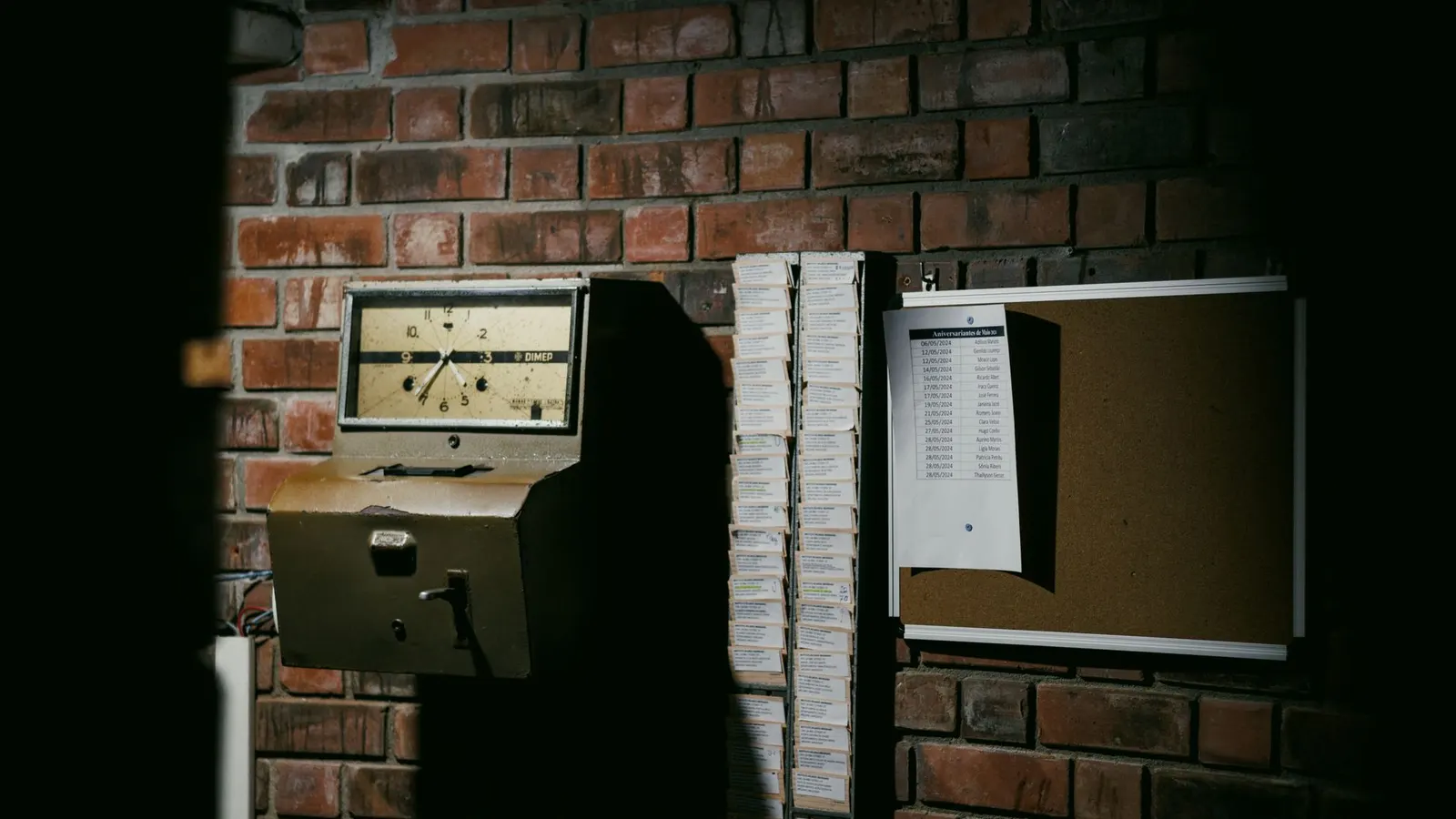
In a lot of businesses the rota lives in a WhatsApp group. Somebody posts next week on a Thursday, a few people reply, two shifts get swapped in the thread, and one gets dropped on the Sunday because trade was quiet. It works. Everybody knows where to look, and nobody has ever needed it again after the week ended.
The Employment Rights Act 2025 is going to start asking that thread questions it cannot answer.
What the Act actually gives people
Three things, for workers on zero-hours contracts and on contracts below an hours threshold. A right to be offered guaranteed hours reflecting the hours they regularly worked across a reference period. A right to reasonable notice of a shift, and of a change to one. And a payment when a shift is cancelled, moved or cut short at short notice. Agency workers are in scope too, with the hirer carrying the guaranteed-hours offer by default.
That much is on the statute book and is not in doubt.
The part almost every summary gets wrong
Search for this and a good deal of what comes back will tell you it starts in January 2027, and that the reference period is twelve weeks.
Neither is settled. The government's own timeline update puts these measures in "2027" and adds that timings will be updated after consultation. That consultation closed on 25 August 2026, and the page still says the feedback is being analysed, with no outcome published.
The twelve weeks has a more interesting history. The consultation put three lengths on the table for the initial reference period, twelve weeks, twenty-six or fifty-two, and said the government preferred twelve. A stated preference among three options is not a rule, and it has been repeated so often since June that it now reads like one. For the periods after the first, no preference was expressed at all.
The hours threshold that decides who is covered, what counts as reasonable notice and how much a short-notice payment is are all in the same position: left to regulations that have not been made. So if somebody has quoted you a number for any of this, they have quoted you a proposal. Some of the better legal write-ups are scrupulous about saying so. Most of what ranks is not.
The contrast inside the same Act is worth noticing, because it shows this is not general vagueness. The unfair dismissal qualifying period does have a date: it drops to six months on 1 January 2027, and that one you can plan against precisely. The zero-hours measures do not. Anyone presenting them as though they did is either reading a law firm's summary of a consultation, or selling something with a countdown on it.
- No date
- Fixed yet for guaranteed hours or shift-notice rights
- 1 Jan 2027
- When the unfair dismissal qualifying period does drop
Why the missing numbers are not a reason to wait
Here is the useful thing about those four unknowns: every one of them is an unknown about the threshold, not about the input.
Whatever the reference period turns out to be, and whatever counts as short notice, they will all be worked out from the same short list of facts. Which shifts were offered. To whom, and when the offer was made. What was actually worked. What was changed or cancelled, by which side, and how long before it was due to start.
That list does not change if the period is twelve weeks or fifty-two. It is the same list either way, and it is the part you can start keeping today.
The range is itself the reason not to sit on it. If the first reference period could be twelve weeks or could be a year, the honest planning assumption is the longer one, because that is the version you cannot construct after the fact. A reference period is a stretch of real weeks, and nobody yet knows whether the first one starts when the rules commence or reaches back before that. If it reaches back, the weeks being measured are weeks you are working through now, and they are being recorded once only.
What a group chat cannot do, however careful everyone is
It records messages, not shifts. "Can you do Thursday?" followed by a thumbs-up is perfectly clear on Thursday and close to useless in eight months, when the question is whether an offer was made and accepted.
It has no history of change. When Thursday became Friday, the earlier version simply is not there. The same is true of the rota printed and pinned to the wall each week, where last week's copy is in the bin, and of the spreadsheet that gets overwritten every Sunday.
And it sits on personal phones. The record of who agreed to what belongs to a handset you do not own, and it leaves the building when they do.
None of that is an argument that WhatsApp is the wrong way to tell people about a shift. It is a fine way to tell people about a shift. It is simply not a record, and it has been quietly doing a record's job.
What to actually do, which is smaller than it sounds
- 01Move the rota somewhere a change leaves a trace rather than replacing what was there
- 02Record the offer and the response, not only the shift that ended up being worked
- 03Log cancellations and changes with a timestamp and who initiated them
- 04Keep it off personal devices, so the record survives the person
- 05Make sure last year is still readable, not just backed up
Notice what is not on that list: buying a workforce management platform. A shared spreadsheet with version history switched on, or a shared calendar where changes are edits rather than new posts, will satisfy most of it. For a firm of eleven people staffing two shifts a day, that is genuinely the right answer, and we would say so.
The point at which a system starts to earn its place is when the rota has to reconcile against something else. Hours worked feeding a payroll run. Staff assigned to jobs with their own dates. More than one site, or a manager per site each keeping their own version. We built week-by-week planning with staff and fitter management into the Resource Planner because renovation and fitting firms hit exactly that, and a spreadsheet stops coping around the point a change in one place has to show up in two others.
If your rota already lives in something that keeps its own history, you have very little to do here. Check that a cancellation is recorded as an event rather than a deletion, and that you could read back six months. Then leave it alone.
The bit we are not going to help with
What your contracts currently permit, whether a particular worker is in scope, and what any of this means for someone's terms are all solicitor questions, and we are not solicitors. Ask one, and ask again once the regulations are published, because that is the point at which the answers become real rather than indicative.
The records half is different. It does not depend on the detail, it does not depend on the date, and it is the half that cannot be done retrospectively. Whatever the regulations say when they arrive, they will be answered out of what you wrote down in the months before anybody told you the numbers.
If you want a look at where your rota currently lives and whether it would survive the question, the first conversation costs nothing.
We work with businesses across Knutsford, Alderley Edge, Wilmslow, Altrincham, Stockport and Warrington, and remotely for clients anywhere in the UK.
If any of this sounds like your business, we will tell you plainly whether we can help.