
The broadband goes down at ten past nine. What is still working?
- Technology
- IT consultancy
- Knutsford
- Warrington
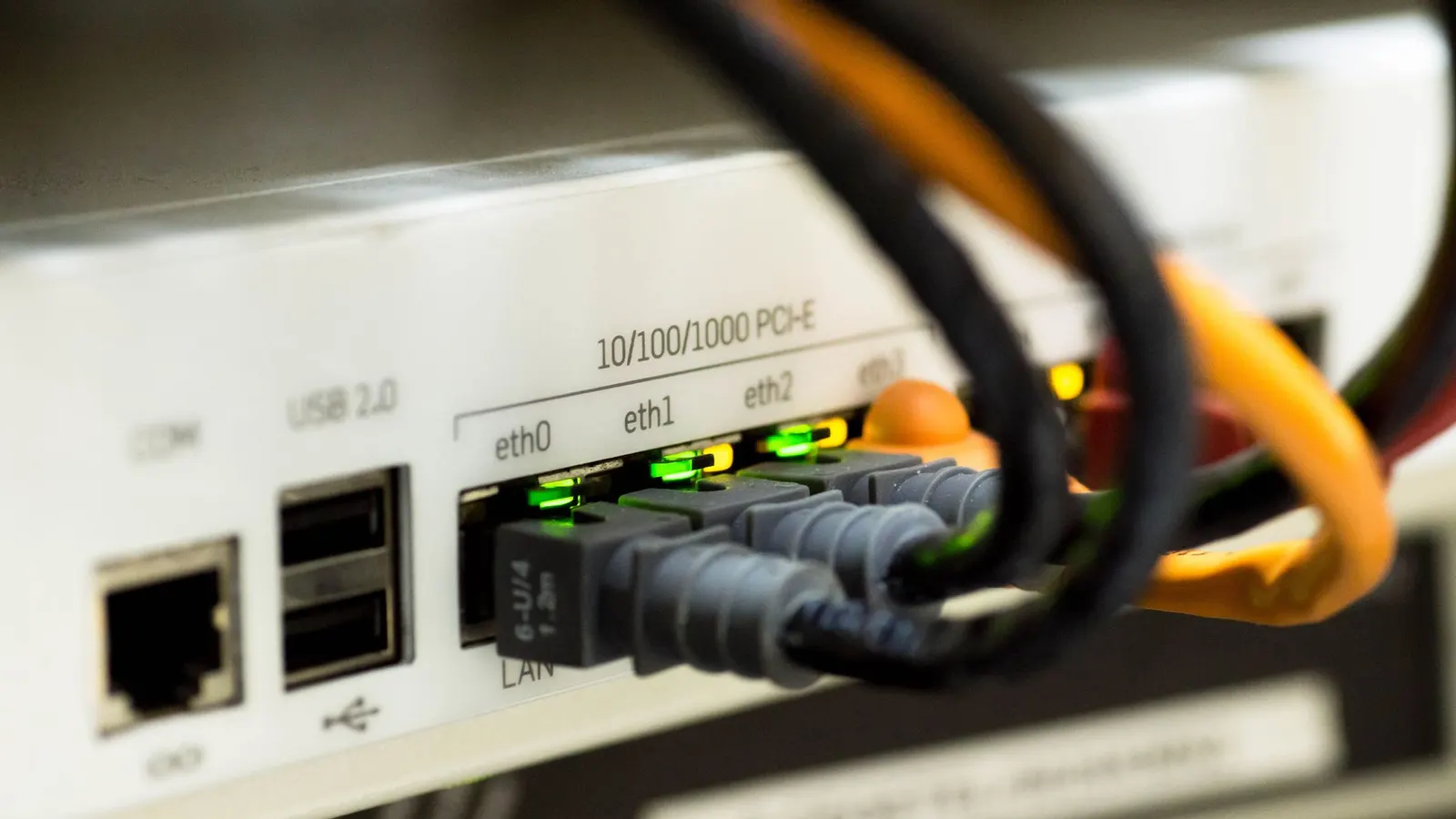
The line drops at ten past nine and the next ten minutes are always the same. Someone reboots the router. Someone else rings the provider and joins a queue. Everybody else discovers, one at a time and out loud, which of the things they were about to do has stopped working.
That discovery is the expensive part, and it is the part you can do in advance on a quiet Thursday instead.
The dependencies moved while nobody was looking
A decade ago an outage meant no email and no web. Annoying, survivable, and the phone still rang. The list is longer now because so much of the building quietly took up residence on that one connection.
The phones are the obvious one. If your handsets went digital in the last few years, and most have, the phone service is internet service wearing a different hat. The line goes, the phones go with it.
Then the things nobody files under IT. The card terminal, which is either on the office wifi or on its own mobile signal, and almost nobody in the building knows which. The door entry panel. The CCTV, which usually keeps recording locally but stops being something you can look at. The copier's scan-to-email. The booking system, the job diary, the accounts package, all of which now live in a browser tab rather than on a machine in the corner.
And underneath all of it, the quiet assumption that somebody's mobile will cover the gap, which is true right up until the point where the office is in a signal notch and three people are holding their phones near the window.
Establish the list deliberately
Not a plan. A test, and a short one.
Pick a genuinely quiet half hour, tell everyone what you are about to do, and unplug the internet. Not power off, not a reboot, just the connection gone, the way it goes on a real morning.
- 01Warn the office, then disconnect the line for fifteen minutes
- 02Have everyone try to do the next thing they were going to do
- 03Write down what stopped and what carried on
- 04Plug it back in and split the list in two
The splitting is the whole exercise. One column is things that genuinely cannot wait an afternoon: taking payment, answering the phone, getting into the building. The other is everything that can, which in most offices turns out to be a great deal more than people expect. Email that arrives half a day late is a nuisance. A customer standing at a counter that cannot take their card is a different order of problem.
Most firms find one or two items in the first column and a dozen in the second. Knowing which is which costs you fifteen minutes and it is the only thing that lets you spend proportionately afterwards.
The two fixes that are worth arranging now
Both are cheap, and both only work if they were set up before the morning they are needed.
The first is a call divert. Your phone provider can send the main number to a mobile when the system is unreachable, and the setting usually already exists in the portal. What is missing in most firms is not the feature but the decision: whose mobile, and does that person know. A number that diverts to a handset in a drawer is worse than a number that rings out, because the caller thinks they got through to someone.
The second is knowing who tethers. One laptop on one phone's mobile connection will not run the office, but it will run the two or three things in that first column. Work out in advance which laptop, whose phone, and whether the data allowance on that contract can take it. Then try it once, because the first attempt at tethering is never the smooth one.
Beyond that, sensible small things. A charged mobile battery pack near the desk that takes the calls. The provider's fault number written somewhere that is not a browser bookmark. A router you can actually reach without moving furniture.
A continuity plan that fits on one side of paper and has been tested once beats a twelve-page one that has not.
You probably do not need a second line
Here is the part a connectivity salesperson will not open with.
A backup connection, whether that is a second broadband service or a 4G failover box, costs money every month for something you hope never to use. For a firm whose first column is empty, or contains one item that a mobile covers fine, it is an insurance policy against a mild inconvenience. Spend the money on something that earns.
There are firms where it is obviously right. If you take card payments continuously, if the business is a shop or a surgery where people are standing in front of you, if a day of downtime has a number attached that you can say out loud, then failover is not a luxury. It is also usually cheaper than people assume.
The order matters more than the answer. Establish the exposure, then decide. Buying failover for an outage nobody has measured is the same mistake as buying a backup product before testing a restore: it converts an unknown into a direct debit without ever making it a known.
One building, no other site
The version of this that catches out the businesses we work with is the single-office one. A firm with three branches has somewhere to send people. Most firms around here do not, so the office is the single point of failure and the only real failover is the fact that everyone has a home and a laptop.
That is a perfectly good answer, as long as somebody has checked it works. Can people actually get into the systems from home, or does the accounts package only run on the PC in the back room. That question has nothing to do with broadband and everything to do with whether an outage is a bad morning or a lost day.
We moved a client off an ageing phone system onto Teams Phone, and the useful thing about that kind of arrangement is that the phones stop being tied to the building at all. Worth knowing when you are next replacing something, rather than a reason to replace anything today. The analogue switch-off is prompting a lot of these decisions anyway.
The short version
Unplug it on purpose for fifteen minutes, write down what stopped, and fix only the things in the first column. For most offices that is a call divert somebody has actually tested and a decision about whose phone gets tethered, and the whole exercise is done before lunch.
If your first column turns out to be longer than you expected, that is worth an hour of conversation before the next outage rather than during it. We would rather tell you the arrangement you have is adequate, when it is.
We work with businesses across Knutsford, Alderley Edge, Wilmslow, Altrincham, Stockport and Warrington, and remotely for clients anywhere in the UK.
If any of this sounds like your business, we will tell you plainly whether we can help.